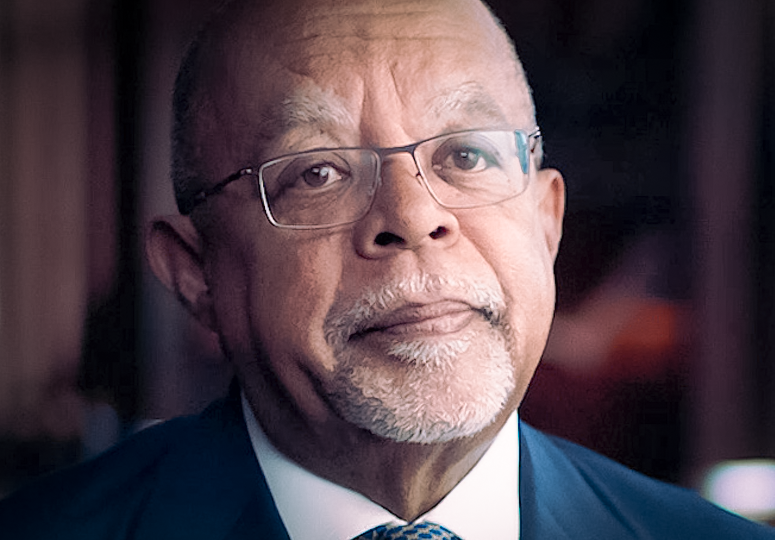
JOHN SILVANUS WILSON
INTERVIEW ARCHIVE
John Silvanus Wilson, President of Morehouse College (2013-2017)
June 15, 2023
Interviewed by: David Bender
Total Running Time: 44 minutes and 24 seconds
START TC: 00:00:00
PRODUCTION
Dr. Wilson, interview, take one. Marker.
00:00:05
INTERVIEWER
Dr. Wilson, thank you for doing this. You know, there's so many things that I learned from reading your book, but one was, a quote I'd like you to say back, and then sort of take it from there, what it means. It's a Mark Twain book, one of my favorites. "The two most important days in your life: the day you're born, and the day you find out why." So, if you could say that quote, and then talk about what that means to you and how that's informed your life?
00:07:06
ON SCREEN TEXT:
John Silvanus Wilson
President of Morehouse College (2013 – 2017)
00:00:39
JOHN SILVANUS WILSON
You know, I, being raised by a preacher and having a grandfather as a preacher, I always heard about this concept in the context of church, of being born again. And later in life, when I came upon the Mark Twain quote, the two most important days in your life are the day you're born and the day you find out why. That “why” day, that second day, is really important. And I've always understood, ever since I thought about that deeply, and I think, you know, today, maybe eight billion people have had their first day, obviously, they were born, but a very small minority, a tiny minority have had their second day. That is, they're living intentionally. They're living on purpose, on course to some destination.
00:01:39
JOHN SILVANUS WILSON
I ended up using that at the center of my presidency of Morehouse College. Morehouse college was a second day institution for me. There's something about the way that institution was structured, the educational experience, the professors, the culture, that made it possible for me to realize my calling in life. That was true about Morehouse well before I got there, true for many others. Dr. King, Martin Luther King Jr. arrived at Morehouse reading at an eighth-grade level and Morehouse... He thought he might be a doctor or a lawyer because of the lifestyle it would afford. But he realized it's possible to be in a pulpit and do something different than what he had been used to seeing. And basically... That was his second day, he really figured it out. I went to
00:02:39
JOHN SILVANUS WILSON
Morehouse with a couple of noteworthy people who I'm pretty confident had their second day. One was Spike Lee, who said sophomore year, "John, I know what I wanna do." I said, "what?" He said, "make film." And basically, he made a film before he finished Morehouse and went on his way. My second day at Morehouse happened when I had an encounter with Benjamin Elijah Mays. I was very frustrated with Morehouse, and he listened to my frustrations. And then he said... He looked me in the eye, and if you know anything about Ben Mays, when he looks at you, he gets your full attention. It's like the voice of God. And he said, "Young man, I want you to do something. I want to stay here. I want you to finish. I want you to get more education and experience and come back here and make a difference." And I was stunned
00:03:39
JOHN SILVANUS WILSON
by that. He converted all my complaints into an energy, a positive energy. Wow, I'm complaining about the way the place is run. I can do something; I can come and do something about it. So, I felt like it was in the stars that I would eventually be president. And that's obviously what happened.
00:04:04
INTERVIEWER
Benjamin Elijah Mays is an extraordinary man. Talk about him and talk about the influence he had on so many people, including yourself.
00:04:12
JOHN SILVANUS WILSON
Benjamin Elijah Mays was the most consequential president of Morehouse College, and I would argue he is among the most consequential presidents of any college or university in the country, if not the world. He made, he transformed Morehouse. Morehouse was in financial trouble. It was a little uncertain. John Hope had been, before him, had been an extraordinary president. But Benjamin Elijah Mays took it to another level. He started in 1940. He was president for 27 years at Morehouse College. And by the time he finished, Morehouse was on the map. There was a known thing in the country and the world; there was such a thing as a Morehouse Man. And that kind of blossomed under Benjamin Elijah Mays, who really got in the minds and lives
00:05:12
JOHN SILVANUS WILSON
and spirits and souls of these young men and made them feel like they had a purpose in life, like they had... They were called to do something. He charged them, he commissioned them to do something about democracy in the country and in the world. And so, this phenomenon of a Morehouse Man became a thing on his watch. And he was personally responsible for mentoring Dr. King and inspiring generations of of young men. When I was doing my research on him before I became president, he rarely graduated a class of more than 100 men. I was shocked by that. Rarely. I believe the count is like 2,700 men
00:06:12
JOHN SILVANUS WILSON
graduated on his watch, might be 2,800 for 27 years. And they became some of the most remarkable men in the country as warriors and soldiers and generals for civil rights and making the world safe for democracy. So, I believe his reputation and luster had a lot to do with what drew me to Morehouse in the first place and why I have stayed in love with the institution all these years.
00:06:49
INTERVIEWER
Well, as you say, he mentored Dr. King, he mentored a lot of other people, yourself included, but let's take a minute on Dr. King. How young were you when you became aware of that? What do you remember about that time in the sixties? Do you remember the March on Washington?
00:07:06
JOHN SILVANUS WILSON
My dad was a preacher, but my mom and dad got divorced. And that happened when I was like eight. And we moved to the suburbs of Philadelphia because my mom wanted to... She was a teacher, and she needed to make more money, had four kids. And we ended up going to a church in... just north of Philadelphia in Jenkintown called Salem Baptist Church. And the pastor was Robert Johnson Smith, and he was a Morehouse graduate. And I tell people he is the reason why I went to Morehouse and a disproportionately high number of young men from that church went to Morehouse. I believe he preached Morehouse more than he preached Jesus. I believe there are a
00:08:06
JOHN SILVANUS WILSON
handful of us who believe that Jesus was a Morehouse Man. So, I said, Jesus went there, Dr. King went there, the pastor went there, where else can I go? That's why I went to Morehouse. It was just the thing to do to become, you know, a man. And so that's why I went there.
00:08:28
INTERVIEWER
Do you remember as a young child, that activity that was going on in 16123 that congregated in a march?
00:08:38
JOHN SILVANUS WILSON
I remember a lot of... You know, my childhood is punctuated by these moments when distinctive things happened in the world. And my family was the kind of family that made sure we paid attention to it and made sure we understood it. I'll never forget the day I saw the face of Emmett Till on the cover of Jet magazine in that casket. I was, I was shook by it to my core, by that. I was a kid. I don't recall exactly how old I was, but it was whenever they put his face on the cover of that magazine, it astounded me. And I don't know whether I saw it in real time, or they kept it and it was just like memorabilia, but it was so poignant. My... I remember
00:09:40
JOHN SILVANUS WILSON
The March on Washington because my grandmother went to the march — went to the March on Washington and she had attended, she rode on the shoulders of her mother to go hear Marcus Garvey in New York. So, her... She lived to 99. She was just this woman, she was a race woman. She believed that we had to do something to repair the race and thereby repair the country and thereby repair the world. That was the work. That's what the work we were commissioned to do. All right, this is how I was wired, how I was raised and my mother and my father and then my stepfather believed in that too. So again, when things would happen in the world, I'll never forget when Dr. King was shot. My father, then my stepfather, was astounded. I believe it was
00:10:40
JOHN SILVANUS WILSON
John Facenda made the announcement, and it was just this remarkable moment. My father was crying, and I knew that this meant a lot of change and then subsequently the church helped us to make meaning of that. So, there's so many things. We had a definition of progress, and the definition of progress flowed out of the Civil Rights Movement and everything it tried to do, and the work is just not finished.
00:11:15
INTERVIEWER
You were 10 years old when Dr. King [unclear]. The country exploded. Do you remember? [Unclear] commitment was to non-violence. The response almost everywhere was deeply violent. What do you remember about that?
00:11:40
JOHN SILVANUS WILSON
I remember when Dr. King was shot, the anger, the outrage, the sense or sensibility that this man was above it. You cannot do this. Is the hate so intense in this country that you would kill a peaceful warrior? That made me want to understand, okay, what problem do people have with peace and equality? And of course, that introduced me, with help from my parents, of this notion of inferiority. There are people who were believing that people who look like me were inferior. And that got translated into
00:12:39
JOHN SILVANUS WILSON
a "show them" ethic in our family. Now, my mom was a teacher, and she positioned us to be stealth, high performers in school. We were in a predominantly White school because they had the better books, and she felt like our trajectory in life would be better if we were educated there than in inner city Philadelphia. But there was a lot of hate, and it was palpable. And so very... It was like a whisper; it was like a secret plan. You are going to perform well in school. You are gonna come home with A's and B's. And if you don't, there will be consequences because you need to understand that all these kids who you're in school with, many of whom
00:13:39
JOHN SILVANUS WILSON
don't like you, don't think you should be here, you're going to end up living a better life than them. And the way you do that is you outperform them in school — you don't brag about it — you outperform them, you go to college, you get more education and experience, and your trajectory will be different. And that was in our DNA.
00:14:06
INTERVIEWER
Talk to me about what that meant to you. What your mother said, you have to, and it has to be this way. Did you grow up feeling a responsibility, pressure, resentment at that role? How did that need affect you growing up?
00:14:28
JOHN SILVANUS WILSON
I actually thought the charge that came from our parents to outperform them was fun. I mean, it was fun because it was working. We were outperforming many of them who were hating on us. I did have some White friends. I played chess every morning. I kind of hung with the nerdy students because they didn't, they kind of weren't engaged enough to hate anybody. You know, it was kind of one of those things. And I was an athlete. My brother was too, and we played baseball. So, and the athletes, if you could play, if they didn't like you, they didn't let you know it. So, we got along with the athletes and kind of the nerds, and kind the nerds more so because we were we
00:15:28
JOHN SILVANUS WILSON
were like them: high performers. And so, I could have resented the fact that we had to do that, that we have this armor on that our parents gave us in order to make it through, but I didn't. It was like Negro league baseball, where you show them. And I believe the drive in Negro league baseball in particular, other sports too, was to show them. And when the Negro League played Major League Baseball in those barnstorming games, the Negro league won 75 plus percent of the time. And I believe that that "show them" ethic, "outperform them" ethic was alive and well. And they played a different game. And that's why the biggest regret, which which led to the disappearance of Negro
00:16:28
JOHN SILVANUS WILSON
league baseball, was the approach taken to integration. That is to say, Rube Foster, who was, you know, higher up in Negro league baseball, he had played Negro League and then Negro League himself and then became one of the guys running the league. He was insisting that, yes, integration's coming, but we should integrate by team, and not by individual. But I believe those running Major League Baseball were afraid of that, because they knew the stats. And so instead of Negro League teams integrating as whole teams, which would have introduced a thread of them outperforming, they picked off Jackie Robinson. They picked off individuals. And next thing you know, each Major League team has one like individual. So, they got the players, but they did not get the game.
00:17:29
JOHN SILVANUS WILSON
And in my book, the same thing happened with Black colleges. When integration happened, they started picking off the brightest students, the brightest faculty and the best athletes. But the democracy enhancement game that HBCUs had excelled at in producing all of these leaders was left behind. White higher education got the players, but they did not get the game. And my warning to Black colleges in my book is sharpen the game again, or else we may fade just like Negro League baseball teams faded. We gotta get the game back.
00:18:13
INTERVIEWER
Give us a little history with the presumption that people who are watching this may not even know what an HBCU is or how a Morehouse got started. Take us back even farther to Tuskegee and we'll begin. Walk us through that so we understand how these institutions came to be and why.
00:18:33
JOHN SILVANUS WILSON
One of the reasons why I was inspired to write this book, “Hope and Healing,” is because of the story of how Black colleges develop. Black colleges develop on a foundation of a palpable drive in African Americans to be educated. This preceded emancipation. As a matter of fact, the reason why it became a crime to read, or to be caught learning is because the White racists who made it a crime saw that African Americans were trying to stand up, trying to get up out of this, trying to awaken their minds and become in a new way. And so, they had to make
00:19:33
JOHN SILVANUS WILSON
it against the law to learn how to read. And you don't have to make it against the law unless you see that conduct. And people took the risk anyway. They created these secret learning societies throughout the history of slavery, especially as we made our way through the 1800s. On that foundation, upon emancipation, HBCUs sprung up. There were over 300. Well over 300, and that's called a conservative estimate of them originally. But most of them died for financial reasons. But then you had these, this subset. Many of the HBCUs that survived today survived because they were consequential leaders. And so, upon emancipation, these institutions were born.
00:20:33
JOHN SILVANUS WILSON
Now, they came to be known as HBCUs or historically Black colleges and universities. But remember, since reading had been against the law, they were basically elementary schools initially. Many of them called themselves colleges, but... And one analogy was made that, you know, when I was born, my name was John Wilson as a baby. But I grew up to be a man. Well, when they were born, they called themselves colleges and they were focused on literacy, but they grew up to be a college, okay, because they then expanded the curriculum and grew up to a college and let others do the elementary education when the American education system grows. So, you have these institutions that are called historically Black colleges and universities and
00:21:33
JOHN SILVANUS WILSON
some of them, many of them, have been high performers. I mean, you gotta be a high performer just to survive the madness and the onslaught and the headwinds that you had to survive, surrounded by racism. One of the most remarkable stories in this context is of Booker T. Washington. I confess that I was very anti-Booker T. Washington as I was growing up because I was educated to be. We had to choose between Booker T. Washington and W. E. B. Du Bois. Everyone I knew chose Du Bois, because Booker T. Washington was an accommodationist. But a certain point later in my life, well after I was out of college and graduate school, I read Booker T. Washington directly and he became a hero to me.
00:22:33
JOHN SILVANUS WILSON
He became a hero and I write about it in my book because he stood up Tuskegee, the Tuskegee Institute, now Tuskegee University, and made it the largest educational institution in the South, Black or White, at the time. And by the time he died in 1915, they had $2 million in endowment. They had $2 million in endowment before Williams, before Amherst, before Swarthmore, before Grinnell. I have in my book about 20 institutions whose names everyone would know, and Booker T. had Tuskegee at $2 million in endowment before any of them. He was just, he worked his magic in the first Gilded Age in the late 1800s, early 1900s.
00:23:28
INTERVIEWER
Talk about how Washington was able to attract this incredible support. I was stunned to see presidents.
00:23:38
JOHN SILVANUS WILSON
Booker T. Washington had this amazing vision about how to emerge from human enslavement. He was convinced that education was a way... If you know his story, he walked some, I don't know, 300 miles to Hampton, the Hampton Institute to be educated. He made his way there as a kid all by himself, hitching rides and doing whatever he could to get there and became educated and cleaned the room. He took an admissions test by cleaning a room to pass the test to get in. And he just had this drive. The president at that time of Hampton Institute became his hero and he wanted to stand up a Hampton himself. And so, he makes his way to Tuskegee,
00:24:38
JOHN SILVANUS WILSON
and the folks in Tuskegee were looking for a principal, and Booker T. Washington became that person. And he deliberately made kind of the birthday of the Tuskegee Institute, July 4th, 1881. Independence Day. He did that deliberately. And he announced shortly after starting the school that our goal is to build an endowment. Well, to build and endowment, you can't charge tuition, you can't... There aren't many, there aren't any African Americans with money. He had to figure out a way and what he ended up doing, there's this era in American history called the Gilded Age coined by Twain, where there's this explosion of wealth. And Booker T. Washington ended up being in the presence of some of the wealthiest men of
00:25:38
JOHN SILVANUS WILSON
his time and of all time in America. We're talking John D. Rockefeller and Andrew Carnegie. Andrew Carnegie was on his board, okay? Harding and Roosevelt were in his orbit. He had tea at the White House. Booker T. Washington was a mover and shaker. He had tea in Europe with the Queen of England. This was an amazing man. And it was not merely my revelation about him, because I thought, okay, he made his way around the Whites of his time as racist as they were because he was bowing and scraping. No, sometimes he did to survive, because the consequence was these people will kill you with impunity and move on. He had a campus with 1,500 kids, some a
00:26:38
JOHN SILVANUS WILSON
little older, but he had a campus that he had to protect. And they were situated in the heart of an area that had made a reputation of itself for lynching African Americans. This was an amazing thing to do. And I believe he had this vision for how America would be healed. And if you listen to the speeches, read the speeches that he gave. For instance, the one that he gave in Carnegie in Madison Square Garden called the Carnegie Hall, he talked about the future of America. We represent a third of the population in the South. We're either gonna be a third of the reason why America, the South, and America rises, or a third the reason, why it all
00:27:38
JOHN SILVANUS WILSON
breaks down. You choose, and education is the way. He gave this amazing vision for how we move, how we emerge from this place. Carnegie was in the audience, and he strokes a check for $600,000, okay? And this time, present value, that's roughly $400 million. That hasn't happened to an HBCU. It's happened a few times at Harvard and other places, but not to an HBC. That's the biggest gift in the history of historically Black colleges and universities or HBCUs since the start.
00:28:20
INTERVIEWER
Talk about your grandmother. Marcus Garvey, these stories handed down from generation to generation, a lot of what we're trying to do here are preserve stories so they can continue to be handed down. How important is storytelling to the history of the Black experience?
00:28:44
JOHN SILVANUS WILSON
Storytelling was profoundly important in my upbringing. As I said, my mom was a teacher. She told stories. She read books to us at night. My dad was a preacher. He told stories in the pulpit. The way my access to learning was through stories, parables, and whatnot. And as a result of that, I have this sense and sensibility about progress, all right. I believe we have lived lives on a storyline, and I've had this idea of progress all my life and we are gradually moving toward where we wanna be. We're breaking down the hate and we're getting to the America as described, as Dr. King said, on paper. The night before he died, Dr. King said, "All we say, America,
00:29:44
JOHN SILVANUS WILSON
is be true to what you said on paper." That is a story, that constitutes a story. Now, the charge for education is to enlighten people enough to see that we are more the same than we are different, all right? To embrace our differences, to see our differences as the reason why there should be one united humanity. Education, and in particular higher education has not been doing a good job at all. As a matter of fact, only Black colleges have taken that seriously. And they took it seriously enough to, in the middle part of the 20th century, to deliberately produce the generals and foot soldiers of a movement to aggressively and intentionally improve the democracy.
00:30:45
JOHN SILVANUS WILSON
I ask in my book, why didn't the civil rights movement happen 100 years before it happened. Why wasn't... For instance, when emancipation came and then reconstruction, which is the movement to make things right, lasted for 12 years and then it was all broken down. Most of the Southern governors, they wanted to retain their power, they wanted to maintain racism, and so they reversed everything and the powers that be in Washington did not have the will to do something on the order of another civil war, so they just, they got into a gradualism. Well, I insist.
00:31:34
INTERVIEWER
They cut a deal.
00:31:35
JOHN SILVANUS WILSON
They cut a deal. That's one of the ways. So, the powers that be in Washington basically cut a deal with the South. And it made it okay. Okay, you keep discriminating, et cetera. Why didn't the civil rights movement happen at that point, as led by Harvard professors and presidents teaching their students and alumni to pull it off. Well, Harvard and the Ivy League have been negligent with respect to democracy, unlike HBCUs, which are the only tradition to take it seriously. And I argue in my book, American higher education writ large needs to do a scaled version of what HBCUs did in the 60s. We need to do it now, and we need to target two great challenges:
00:32:34
JOHN SILVANUS WILSON
the democracy, and completing the perfection of the democracy, and climate change. Those are two lethal threats right now, and I believe we will not overcome those threats unless we aggressively do so, something akin to what HBCUs did in the last century.
00:32:58
INTERVIEWER
You mentioned Du Bois as someone you always looked up to before you understood, Booker T. Washington [unclear]. He had an evolutionary self, realizing that there was a bigger picture. And the same thing happened to Dr. King the last year of his life. He understood that it was not just racial justice but economic justice, the bigger picture. Can you, in your words, talk about those two breakthroughs of perception seen...?
00:33:33
JOHN SILVANUS WILSON
I was talking about the, the idea of progress and people like W.E.B. Du Bois, toward the end of his life, he realized that he had made a mistake. He basically... This is at the time when he starts questioning capitalism and the power of capitalism. And he puts an analogy in his biography, one of his biographies, Dusk of Dawn. He says that all my life I've been... What the White world was doing, I realized, needed correction, but I thought it was basically right, the progress and everything. And I believe we just have to become a part of it. He said, it's as if moving on a rushing express train, my thought was as to where I would sit on the train rather than the
00:34:33
JOHN SILVANUS WILSON
train's rate of speed or destination. And he said, I should have paid more attention to where the whole thing was going. That perspective shift took him to a place where he was questioning capitalism and the whole thing. Same thing happened to Dr. King. He started questioning these three evils, militarism, you know, classism, racism. He starts questioning militarism, capitalism and racism, and he's thinking, boy, this is going to take far more work than I ever realized. It's not just an appeal to the heart or the conscience. You know, if you think about this... I think about Dr. King. He started questioning the country's Christianity. We are a Christian nation. We call ourselves a Christian Nation. We call ourselves a democracy.
00:35:34
JOHN SILVANUS WILSON
But I think everybody, most people, most reasonable people are clear that we are not yet a democracy, I would argue that we have a lot of work to do on what a Christian, what it means to be a Christian nation. The people... The Christians who made Black colleges necessary are not the same as the Christians who made Black Colleges possible. All right, they can't be the same religion. There are Christians who are pro-slavery. And then there were Christians who, at emancipation, left their homes in New England and came south to teach in Black colleges. I would argue that those are two different religions. They're not the same religion, I'm sorry. And America needs to figure out which religion it is.
00:36:33
JOHN SILVANUS WILSON
Today we see Christians who are aligning themselves with reprehensible things. Things you can't possibly contend are consistent with Christianity as reasonably interpreted. That's another thing that can be made clear in our schools. We can begin to define terms better and get us to a higher, better place in this country.
00:36:59
INTERVIEWER
I want to talk to you about Dr. King. Many people only see him as a figure out of history. That's what we [unclear]. But one thing that did happen, an important thing, was a national holiday created in his memory. Can you talk about the importance of [unclear] holiday and what that's meant to people and why that's proved to have significance?
00:37:25
JOHN SILVANUS WILSON
I think about Martin Luther King and his trajectory. He came to Morehouse College reading at an eighth-grade level. Morehouse College transformed him into the only graduate of a college in American history who has a Nobel Peace Prize, a memorial and granite on the National Mall, and a national holiday. To me, that is just astounding and remarkable. And King Day, that holiday, I believe should mean more than it means now. To me, it's a day to celebrate. And to recommit ourselves to what has been called the American experiment. Dr. King was, I believe, the most remarkable
00:38:24
JOHN SILVANUS WILSON
champion in reminding America that we said we were going to be built on the idea that we all are created equal, that these differences wash away when you really understand the human creation. And so, if we really believe that, that we are equal, there is no hierarchy, there are no superior and inferior sexes, races, genders, whatever it is, then there's a way to model it. We are far from modeling that. I believe that day, King Day, of all the days in the year, is a day when we should revisit what that means and recommit ourselves to what that means, and really, based on what we understand that day, live every day according to those values and those principles. That would honor King more than anything else.
00:39:34
INTERVIEWER
You've committed your life to working with young people, institutions of learning. We're moving into a new world of technology with famously [unclear] even a decade. What makes you hopeful for young people today. What do you see that gives you hope of their having that second day?
00:40:04
JOHN SILVANUS WILSON
I am hopeful. I am hopeful because when I was President Morehouse, I saw a restlessness in those young men that I had when I was at Morehouse. And I was driven to make rough places smooth and crooked places straight, to do the work that is required to perfect this union and that is required, as my grandmother would say, the work required to get you into heaven, okay? That's the way she kind of put it. So, that's what gives me hope. But what also gives me hope is an investigation I did earlier in my life. I went... Upon finishing Morehouse, I went to Harvard Divinity School, and I focused on the history of religions, and I had one thing I needed to find out. What do all religions have in common?
00:41:05
JOHN SILVANUS WILSON
And what I discovered was brilliantly captured by my classmate Spike Lee in a film he did called “Do the Right Thing” where he has this character Radio Raheem in a boxing match, where his right hand is love and the left hand is hate and they are having a fight, and at the end — Bill Nunn plays this role, he's a Morehouse guy; Sam Jackson was in that movie, he's the Morehouse Guy — Spike shoots this scene where Bill Nunn, as Radio Raheem, works his way through the fight, and at end, love knocks out hate, and he goes, love wins. Love KOs hate. That's what gives me hope, because all religions agree that in the end, love will win over hate. And I see it in the eyes of the people on our campuses today.
00:42:07
INTERVIEWER
You personally have a purpose and meaning for your work and your life, but you personally, what gives you joy, other your family, and specifically, what music gives you joy? What do you think [unclear] but music speaks to your soul.
00:42:31
JOHN SILVANUS WILSON
Oh my gosh. That's a great question, especially on the music. I will say this. I was a, I've been listening to jazz my whole life. It was in my family. And jazz, rivaling and sometimes more than gospel gets me in a spiritual place. Gets me closer to God. And one of the people who has done that for me the most, there's something about the piano that gets me. Saxophone, there are other instruments, but the piano? Oscar Peterson? If you've ever heard him play “Who Cannot Turn To” live, there's several versions of it. One of them live is transcendent. You're in the presence of God.
00:43:32
JOHN SILVANUS WILSON
Art Tatum, but Joe Sample, and he is not traditional jazz, but he does this thing called Rainbow Seeker. And I, there's something about that that is just transcendent. And I was talking to a class of aspiring presidents recently, and I showed a quote of Joe Sample talking about music and it verifies everything I've felt about jazz. He believes that there's a way to reach mastery in music and in life that is divine, and I believe that too.
END TC: 00:44:24